Supreme Seat
Sri Akal Takht Sahib
Significance
The supreme seat of Sikh temporal authority. Hukamnamas (edicts) issued from here are binding on all Sikhs worldwide. It symbolises the inseparability of spiritual and worldly duty (Miri-Piri).
History
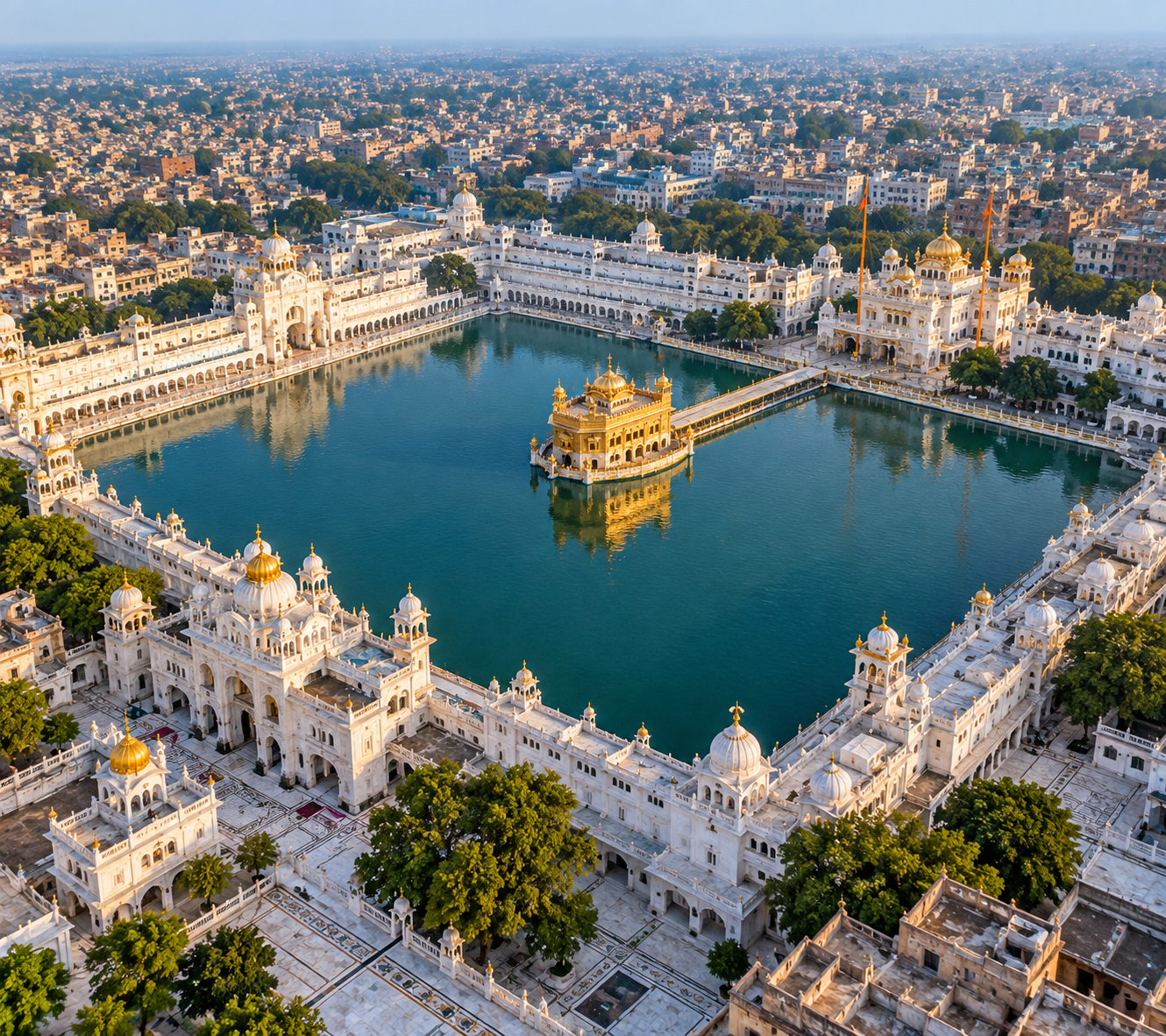
Sri Akal Takht Sahib, meaning the 'Throne of the Timeless One', was established by Guru Hargobind Sahib Ji in 1606 CE. It stands directly opposite the Sri Harmandir Sahib (Golden Temple) in Amritsar, Punjab.
Guru Hargobind Sahib Ji wore two swords — Miri and Piri — representing temporal (worldly) and spiritual authority respectively. The Akal Takht became the seat from which the Guru dispensed justice and issued commands (Hukamnamas) on worldly matters, complementing the spiritual guidance offered at Harmandir Sahib.
Throughout Sikh history, the Akal Takht has been the centre of political and religious decision-making. Sarbat Khalsa (the congregation of the entire Khalsa) has historically gathered here to deliberate on matters of supreme importance to the Panth. Hukamnamas (edicts) from the Akal Takht are binding on all Sikhs.
The Takht was attacked and severely damaged in June 1984 during Operation Bluestar by the Indian Army. The structure was later demolished and rebuilt, first controversially by the Indian government and then rebuilt by the Sikh community itself (Kar Sewa) in 1999.