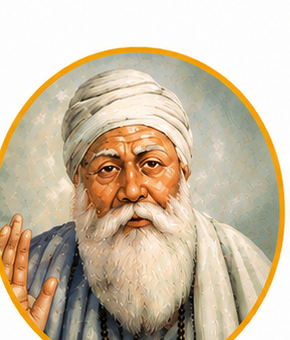
Third Sikh Guru · 1479–1574
Amar Das Ji
ਗੁਰੂ ਅਮਰ ਦਾਸ ਜੀ
Guru Amar Das Ji, the third Sikh Guru, was a fierce advocate for equality and social justice. He abolished the caste system within the Sikh community, championed the rights of women by opposing purdah and sati, and made Langar a central institution — insisting that everyone, regardless of status, eat together before meeting the Guru.
Life Story
Guru Amar Das Ji was born on 5 May 1479 in Basarke Gillan village, Amritsar district. He came from a devout Hindu family and spent decades performing Hindu pilgrimages and rituals, including 20 pilgrimages to Haridwar. In his early sixties, he first heard the Shabads of Guru Nanak Dev Ji being sung by Bibi Amro, daughter of Guru Angad Dev Ji. Deeply moved, he made his way to Khadur Sahib and became a devoted disciple of Guru Angad Dev Ji, serving him with extraordinary humility for eleven years.
At the age of 73, Guru Amar Das Ji was appointed the third Sikh Guru in 1552. Despite his advanced age, he brought immense energy and reforming zeal to the Guruship. He established his headquarters at Goindval Sahib, which he developed into a major Sikh centre. Here he built the Baoli Sahib — a sacred stepped well — and invited all people, regardless of caste or religion, to visit and bathe, making it one of the first pilgrimage sites of the emerging Sikh tradition.
Guru Amar Das Ji was an outspoken champion of social justice and women's rights, highly radical for his era. He condemned the practice of sati (widow self-immolation), opposed purdah (the veiling of women), and encouraged widows to remarry. He introduced a rule that no one — not even Emperor Akbar — could meet him without first sitting in Langar alongside all other visitors, regardless of caste or social rank. When Akbar visited and sat in Langar, it created a powerful statement of equality that resonated across the Mughal empire.
He organised the Sikh community into 22 districts called Manjis, each led by a trained preacher (Manjidaar), effectively creating the first structured Sikh organisational network and vastly expanding the reach of the faith. He composed 907 Shabads — the largest collection by any of the ten Gurus — including the Anand Sahib, the hymn of bliss that is recited at every major Sikh ceremony. He was succeeded by his son-in-law, Guru Ram Das Ji.
Key Contributions
Opposed Sati & Purdah
Boldly condemned widow immolation and the veiling of women, championing gender equality centuries before it became mainstream.
Pehle Pangat, Phir Sangat
Insisted every visitor — including Emperor Akbar — sit in Langar before meeting the Guru, enforcing caste equality in practice.
Built Baoli Sahib, Goindval
Constructed a sacred stepped well accessible to all, becoming one of Sikhism's earliest pilgrimage sites.
22 Manji System
Organised the Sikh community into 22 districts with trained preachers, creating the first formal Sikh organisational structure.
Composed Anand Sahib
Wrote the Anand Sahib (Song of Bliss), recited at every Sikh ceremony from births and marriages to daily Ardas.
Core Philosophy
Guru Amar Das Ji, the third Sikh Guru, was a fierce advocate for equality and social justice. He abolished the caste system within the Sikh community, championed the rights of women by opposing purdah and sati, and made Langar a central institution — insisting that everyone, regardless of status, eat together before meeting the Guru.
”Timeline
Prakash (Birth)
Basarke Gillan, Amritsar district, Punjab
Joti Jot
Sacred Places
Place of Birth
Basarke Gillan, Amritsar district, Punjab
The sacred birthplace of the Guru
Amar Das Ji's Life
Watch the story of Amar Das Ji's life and legacy.